Tova Rubman (Perelshtein)
1912 – 2006
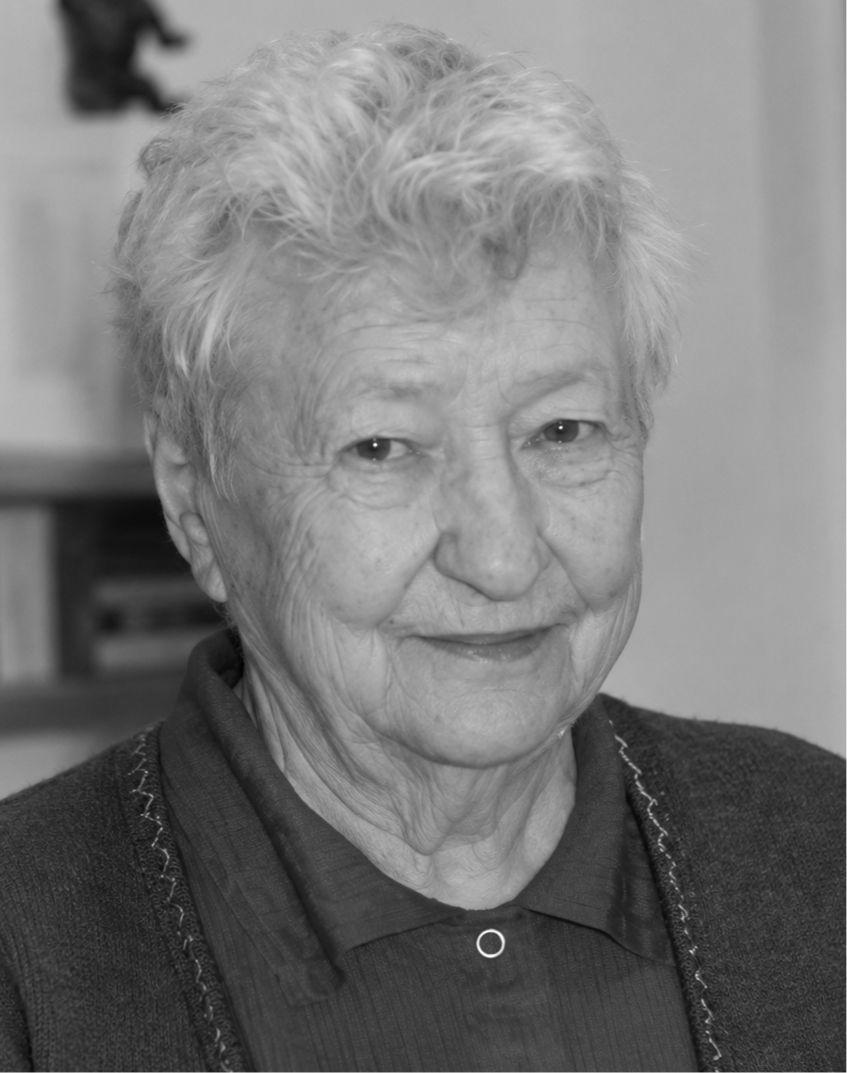
In 1912, in the small town of Kupel in Volhynia, a girl named Tova was born. At the beginning of the twentieth century, Ukraine was home to many such towns, inhabited predominantly by Jews. The Nazi occupation wiped most of them off the map–along with their inhabitants. But in Tova’s memory, her native Kupel always remained alive and flourishing…
She grew up in a traditional Jewish family. Her grandfather was a cantor at the synagogue, a religious and conservative man who was resistant to any kind of change. Her father, a Zionist, had dreamed in his youth of settling in Eretz Israel, but over time his dream seemed to dissolve amid the concerns of everyday life.
Tova, however, was determined to make that dream a reality. In 1929, at the age of seventeen, she joined the underground Zionist movement Hashomer Hatzair (“The Young Guard”). At first, they were reluctant to accept her because of her small stature–Tova looked younger than her age–but her persistence and determination eventually won over the movement’s senior members.
Hashomer Hatzair sought to build a new society in Palestine based on socialist principles. Members of the movement formed hachshara (training) groups, where young Jews engaged in sports and trained for physical labor, particularly agricultural work, in preparation for life in Eretz Israel.
The leadership center of the Soviet branch of Hashomer Hatzair was based in Moscow and was known as the Gdud (“Battalion”). Cells in cities and small towns sent their most dedicated and trustworthy members there. In 1932, the Kupel cell decided that Tova met these criteria and sent her to Moscow. She told her family that she was leaving to study.
Tova could hardly contain her happiness. The journey to Moscow seemed like an extraordinary adventure, and her heart swelled with pride at the trust placed in her. But the journey itself proved far from romantic. For the first time in her life, she saw a railway. The lines were overcrowded and there were not enough trains, so she spent a long time waiting at the small Voitovtsy station before she was finally able to board one. The noise and commotion, the crowds of people with bundles and suitcases literally storming the carriages and clinging to the footboards–all of it overwhelmed her. Along with other unfortunate travelers who had been unable to squeeze into a comfortable passenger carriage, she climbed onto the roof of a freight car loaded with coal. Tova arrived in Moscow black from head to toe, covered in coal dust. When she boarded a tram, the women recoiled from her: nails protruding from her battered old plywood suitcase threatened to tear their silk stockings. Tova did not notice their reaction–she herself was staring wide-eyed at those very stockings, an unimaginable luxury for a girl from a tiny town.
At the railway station, Tova was met by a member of the Hashomer Hatzair Central Committee who went by the name Yosef (Boris Ginzburg). For reasons of secrecy, he changed his name several times. He was a cheerful, high-spirited young man whom no one would ever have suspected of being an underground activist. He took her to the commune near Odintsovo station, where other shomrim (“guards”) lived.
Every member of the movement was expected to learn a skilled trade. Tova enrolled in a lathe operator training course at an aircraft factory. In the evenings, comrades from the movement’s central leadership would come to the commune. They gave lectures on Zionism and read aloud letters from Palestine, from members in exile, and from shomrim who had remained behind in the small towns.
One day, Yosef summoned Tova with urgent news. Her comrade Grisha Sigal had left a package in the luggage room at the railway station in her name. It contained important materials intended for their fellow activists in Ukraine. Tova was to go to the station and try to retrieve it. The risk was considerable, and Yosef warned her of this frankly. But Tova agreed.
When she went to collect the package, the station employees were surprisingly polite to her. A suspicion crept into her mind… Her sense of foreboding proved justified. Before long, two men appeared–plainclothes officers, sturdily built and stone-faced. They asked Tova to “come with them.” It was the first arrest of her life.
On the way to the Lubyanka, Tova kept glancing around anxiously. One of the guards joked grimly: “Don’t worry, no one has ever fallen out of this car.” She would remember those words in 1935, when she learned of the death of one of the witnesses in the Kirov case, who had “fallen” from a police car and been killed… For now, though, that sunny October day, which she would remember for the rest of her life, marked the beginning of an arduous journey that would span decades…
What Tova remembered most about the Lubyanka were the interrogations: they often dragged on well past midnight and seemed truly endless. Two interrogators tried to force her to reveal who the package belonged to. Tova repeated the same answer over and over: “My cousin Grisha Rubman sent it in my name, but I don’t know what was inside–you never let me collect it.”
One day, toward dawn, one of the secret police officers finally lost his patience and shouted: “You stubborn, stupid girl! To you, being arrested is nothing but a game. But understand this: it’s for life! The first time, you’ll be sent into exile; the second, you’ll be put in solitary confinement. Then it’ll be a labor camp, then exile again–and when you grow old, not a single citizen will let you into their home. Children in the street will throw stones at you and shout, ‘There goes that crazy old counterrevolutionary!’ And that’s how you’ll die, abandoned by the roadside.”
The courageous young woman merely burst out laughing in response: her whole life still lay ahead of her, and such a “prediction” seemed absurd. Tova was only nineteen, had only recently arrived in the big city, and even her arrest and interrogations inspired more curiosity than fear. At the time, she could never have imagined that the investigator’s words would prove almost prophetic…
At first, she was placed in a communal cell at Butyrka Prison, where she met ordinary criminals and even picked up prison slang. The thieves nicknamed her shukher (“mischief-maker”) because of her cheerful disposition. She was later transferred to a separate cell for political prisoners–with deathly silence, furniture bolted to the floor, and a guard peering through the peephole every fifteen minutes. The Special Board of the NKVD sentenced the young woman to three years of exile in Tashkent.
Tova was transported from Moscow under guard in Stolypin prison cars. The first stop was the city of Syzran. Typhus was rampant in the local transit prison. The bodies of those who had died lay alongside living prisoners in the communal cells–the authorities were concealing the epidemic. During the day, the presence of the dead was still somehow bearable, but at night, when the doors were locked and the cells plunged into darkness, the fear became overwhelming…
From Syzran, the prisoners were sent to Alma-Ata. They arrived there in late February 1933, freezing, hungry, and without a penny to their names. A kind-hearted attendant at a youth hostel took pity on Tova and her friend Manya ShterenShis and allowed them to spend the night. Exhausted beyond measure, the girls fell asleep right on the floor beside the stove. After the freezing prison cars and the horrors of the Syzran prison, the warm, clean room seemed like paradise. Alas, the attendant who took over the next shift was far less compassionate and drove them out without the slightest regret, as though they were stray dogs.
The following day, a Saturday, they went to the local synagogue, but found the building closed. Late that evening, an elderly Jewish man led them to the rabbi’s house. The rabbi opened the door, greeted them with the traditional “Bruchim haba’im!” (“Blessed are those who come!”), and welcomed them inside. By giving shelter to the “counterrevolutionaries,” he and his family were risking their own freedom. The girls were given whatever food the family could offer: boiled potatoes in their skins, tea, and bread.
In the spring of 1933, Tova finally reached her place of exile–Tashkent. There she lived communally with other exiled Zionists. Unemployment, meager food, exhausting work as an unskilled laborer on the construction site of an automobile tire factory… Tova received nine hundred grams of bread a day and worked barefoot–her shoes had fallen apart, and before long her feet were covered in sores from the cement and mortar.
Yet even amid the hardships of daily life, there were moments of joy. In Tashkent, Tova was reunited with friends and fellow activists. Among them were Avraham Halperin, who became their ideological mentor, and Yoel Ratner–“Yulik”–a gifted organizer, journalist, brilliant orator, and athlete. Largely through their efforts, a kind of Zionist club took shape. Its members gathered in the evenings to discuss Zionism, literature, and international affairs. Well-read and educated, the members of the “club” already suspected that sooner or later Hitler, who had come to power in Germany, would unleash a major war. No less alarming was Stalin’s dictatorship, which ruthlessly suppressed any form of dissent. Yet they seemed almost accustomed to the danger at home–most of them, after all, were already seasoned Zionist activists.
At the end of 1935, when her term of exile in Tashkent came to an end, Tova returned to Ukraine. She initially settled in Proskurov (now Khmelnytskyi), where Manya ShterenShis’s parents lived. She was forbidden from returning to her hometown of Kupel, as the authorities considered her politically unreliable. Tova found work as a bookkeeper–first in Kursk and later in Belgorod.
In both cities, she found fellow members of the Zionist movement. In Kursk, Tova lived for a time with Malka Esrig and her husband, Nukhim (Nusik) Berger. There she also met Hillel Kaplinsky and his friend Mendel (Menik) Beilin–members of the right wing of Hashomer Hatzair and former activists of the organization’s Moscow leadership. Belgorod’s Zionist “circle” included Aaron Shapira (who endured every circle of hell in the Soviet system of “re-education”: three years in a political isolation prison, followed by many years of exile in the city of Frunze and elsewhere), Fanya Sokolovskaya, Shmuel Mann, Sarra Tiborovskaya-Morozova, and Nahum (Nema) Stock. All of them had ended up there after arrests and exile, refused to accept Soviet rule, and dreamed of one day reaching Eretz Israel…
Outwardly, Tova’s life seemed to be getting back on track: she worked while also studying at a workers’ faculty. But the merciless machinery of repression did not let go of its victims so easily…
At this time, Stalin embarked on a course of intensifying the Terror. An atmosphere of fear and suspicion was deliberately cultivated throughout the country, as the authorities searched everywhere for “wreckers” and “enemies of the people.” It became clear that the regime would not forget the Zionists it had failed to finish off in the 1920s either. In December 1936, Tova was arrested at her workplace. The arrest was followed by searches–both at her home and at work. And once again, the endless interrogations began…
This time, the charges were more serious. She was accused under Articles 58-10 and 58-11 of the Criminal Code of the RSFSR–“anti-Soviet agitation and propaganda” and “participation in a counterrevolutionary organization.” In her cell, Tova went on hunger strike–but to no avail. The Special Board of the NKVD handed down its sentence: five years in a corrective labor camp in Kolyma.
The journey there was grueling: first came a month by rail, along the Kursk–Moscow–Vladivostok route. The prisoners traveled in cramped, overcrowded cars, without adequate food or clean water. Then came a week in the hold of the steamship Dzhurma, bound for Kolyma across the Sea of Okhotsk. There, thirst, hunger, overcrowding, and stifling air were compounded by seasickness. Some of Tova’s fellow prisoners did not survive the journey…
Upon arriving in Kolyma, Tova was assigned to logging–one of the most arduous forms of labor. Prisoners felled trees in permafrost and extreme cold, without clothing suitable for the harsh climate and often with barely enough to eat. Tova suffered severe frostbite to her feet and became gravely ill. It seemed that she could endure no more…
Her salvation came when she was transferred to the camp stables. Working as a cart driver was less exhausting, and she was able to regain at least some of her strength. She was assigned a small, unprepossessing horse named Artyomka. The other workers did not want him, and some even mistreated him, hitting and shoving him around. As a result, Artyomka initially seemed ill-tempered and would not let her come near him. But Tova treated him with kindness and patience, and gradually he warmed to her.
Before long, they became true friends, and Artyomka understood her almost without words. Tova sewed him a horse blanket to protect him from insects, which made him look even more comical. “There was something similar in our fates: we were both small, people thought us weak and often treated us with contempt,” Tova recalled. But appearances were deceptive: both horse and handler possessed remarkable endurance, stubbornness, and a powerful love of life.
In the barracks for “counterrevolutionaries,” Tova became close to the prominent Socialist Revolutionary Ekaterina Olitskaya. Olitskaya was much older and more experienced, having endured arrests and exile even before the Revolution. Her support and wise advice helped Tova remain unbroken and preserve her human dignity under truly inhuman conditions.

In June 1942, Tova was released from the camp–but she was unable to escape the bleak Kolyma region. She was granted the status of a free settler and sent to the local settlement of Yagodnoye, where she was required to remain until further notice from the NKVD.
In Kolyma, Tova married Moshe Perelshtein, a Polish Jew who had also survived the camps. In 1943, they had twin sons–tiny, premature babies. Tova had no breast milk, and there was no way to obtain any… The babies soon died. It was a devastating loss–the greatest tragedy of her life.
A year later, their son Iosif was born. His birth gave Tova new strength and helped her emerge from a profound depression. In 1947, the Perelshteins were finally permitted to leave Kolyma, thanks to a medical certificate stating that Iosif suffered from vitamin deficiency and urgently recommending that he be moved to a milder climate.
They moved to Moshe’s hometown of Pinsk, a quiet, welcoming town in southern Belarus. There, the couple had a second son, Borukh. Life was beginning to settle down once again–it seemed that, after countless ordeals, the long-awaited respite had finally come.
In 1948, when the Soviet Union launched its campaign against “cosmopolitanism,” the Perelshteins decided to apply for permission to leave for Poland, where Moshe had relatives. No sooner had they completed the paperwork than Tova was arrested–Borukh was only three months old at the time. An investigation followed. Tova was accused of attempting to leave the Soviet Union illegally despite being considered “politically unreliable.” She was held in prison for six months together with her infant son. The cell was overcrowded, with no conditions whatsoever for a baby… The Special Board of the MGB handed down its sentence: exile in Siberia.
In 1949, another journey into exile began–this time with nine-month-old Borukh in her arms. They were transported in freight cars along the Pinsk–Moscow–Novosibirsk route. Once again there was cold, appalling sanitation, and no adequate food… How did a mother manage to shield her baby from the hardships of such a terrible journey?..
Upon arrival, Tova was sent to Chumakovo, a remote Siberian village cut off from the outside world. The first months were extremely difficult. A glimmer of hope appeared when her husband and Iosif came to join her. Moshe bought a house with a small plot and some livestock, and together they managed to establish a more or less normal life despite the harsh conditions.
In 1951, Tova was unexpectedly summoned to the local MGB office. There, she was required to sign a document acknowledging that she had been informed of a decree of the Special Board imposing lifelong exile on those who had served five years or more in corrective labor camps. People like her were subjected to an especially severe regime: they had to report to the MGB four times a day (!) and were forbidden to travel more than three kilometers from their place of exile.
It was a devastating blow. It seemed that she would remain there forever…
But Tova did not give up. She worked on the local collective farm and raised her children together with her husband. The Perelshteins’ home became a gathering place for other exiles, where they shared not only food but also the stories of their lives and their experiences of struggle, helping one another not to lose heart.
Tova remained true to her ideals and a committed Zionist. Somewhere in the deepest recesses of her heart, she continued to cherish one precious dream–to see Eretz Israel someday…
After Stalin’s death, changes began in the Soviet Union. The rehabilitation of victims during the Khrushchev Thaw could be described as “half-hearted”: it did not extend to even a tenth of the victims of Stalin’s regime, while the full truth about his crimes continued to be suppressed for many years. Nevertheless, hundreds of thousands of prisoners were released from prisons and camps. In 1955, after seven years of exile, Tova was finally allowed to leave Chumakovo. Two years later, something the Perelshteins had dreamed of for so long finally happened: they received permission to leave the Soviet Union–and this time, there were no obstacles in their way.
In 1957, Tova set foot on Israeli soil. Behind her lay three arrests, prisons, Kolyma, Siberian exile, the deaths of her children, illness, and hunger… But she had not been broken. On the contrary, she was full of strength and eager to build a new life. Tova worked, raised her children, and took an active part in the life of her local community. She was happy–at last, she could live among her own people without having to conceal her identity.
And yet Tova could not simply forget what she had endured in the Soviet Union as though it were a nightmare, something that had happened to someone else entirely. In her heart, she could still hear the voices of her friends from the movement, the songs of the shomrim, the shouts of prison guards, and the cries of dying children. Her frostbitten feet still remembered the cold of Kolyma, and her cheek still burned with the memory of an interrogator’s slap. Nor did she forget the people of her native Kupel, murdered by the Nazis during the occupation. Her memories found their way into a book, Remember Them, Zion, published in Jerusalem in 2003. Its pages are deeply moving: a first-person account filled with the pain of what she endured and with love for her family, friends, and comrades.
In 1995, Tova received an honorary award from the Jewish Agency (Sohnut) for her active involvement in the Zionist movement and was granted the title of Prisoner of Zion. She wore the award with pride, regarding it not only as recognition of her own contribution but also as a tribute to all her comrades who never had the good fortune to see Eretz Israel…
Tova Perelshtein (Rubman) lived to a ripe old age. She saw her children and grandchildren grow up and watched Israel become a strong and prosperous state. She left behind not only a book, but also a lasting memory in the hearts of all those who came to know her story. Her life stands as an example of unbreakable will, courage, and unwavering devotion to her ideals.
16.08.2026
Author: Mikhail Krivitsky
Translated by Lena Lores
Bibliography and Sources
1. Perelshtein (Rubman), Tova. Remember Them, Zion. Jerusalem. 2Tova Pearlstein’s Story. Tova Perelshtein and Her Life // kupel.net
2. State Antisemitism in the USSR: From Its Beginnings to Its Culmination, 1938–1953 / General ed. by Academician A. N. Yakovlev; compiled by G. V. Kostyrchenko. Moscow. 2005. Internet Archive edition
3. Kostyrchenko, G. V. Stalin’s Secret Policy: Power and Antisemitism. Moscow. 2003.
4. Gilboa J. The Black Years of Soviet Jewry. 1939–1953. Boston. 1971.
5. Gitelman Z. Y. A Century of Ambivalence: The Jews of Russia and the Soviet Union, 1881 to the Present. Bloomington. 2001.
6. Golden P. O Powerful Western Star!: American Jews, Russian Jews and the Final Battle of the Cold War. Jerusalem. 2012.
7. Jews in the Soviet Union: A History: In 6 Vols. / G. Estraikh, D. Engel (eds.). N. Y. 2022–2025.
8. Pinkus B. The Jews of the Soviet Union: The History of a National Minority. Cambridge. 1988.
9. Ro’i Y. The Struggle for Soviet Jewish Emigration, 1948–1967. Cambridge. 1991.
10. Slezkine Y. The Jewish Century. Princeton. 2004.
11. The Jews in Soviet Russia since 1917. Oxford – London – N. Y. 1978.
