Avraham Belov-Elinson
1911 – 2000

Avraham-Yehoshua ben Moshe Elinson was born on August 1, 1911, in Mogilev, into a traditional Jewish family. His parents, Moshe and Bella Elinson, provided their son with a thorough religious education. The boy attended a cheder and a yeshiva and also studied at home. In 1920, when the Soviet authorities banned religious educational institutions, nine-year-old Avraham refused to give up. He walked several kilometers outside the city to attend a clandestine yeshiva that had miraculously survived the crackdown. There, he gained a strong command of Hebrew and continued studying the language of his ancestors independently in the years that followed.
In 1926, Avraham graduated with honors from a seven-year general education school. That same year, he learned that a local branch of the Zionist youth organization Hashomer Hatzair (“The Young Guard”) was active in Mogilev. On a friend's recommendation, Avraham joined the organization and became an active member. Before long, he began publishing a handwritten magazine in Hebrew. This marked the beginning of his career in journalism and literature.
In the late 1920s, another wave of repression swept through the Zionist movement. The local branch to which Avraham belonged was dismantled. To avoid arrest and continue his education, the young man moved to Leningrad.
There, he enrolled in a technical college specializing in boiler and turbine engineering, graduating in 1933. At the same time, Avraham studied piano at a music school and later entered the musicology department of the Leningrad Conservatory–an extraordinary combination of remarkable musical talent and an aptitude for the technical sciences!
Yet it was writing and publishing that attracted him far more. From the early 1930s, Avraham worked as a freelance correspondent for the Moscow newspaper Za Industrializatsiyu (“For Industrialization”), and in 1934, he joined the staff of Leningradskaya Pravda (“Leningrad Truth”). He covered a wide range of subjects, from honoring outstanding workers to Russian-Indian relations. On occasion, Avraham also ghostwrote articles for high-ranking officials and celebrated figures in the arts, including composers Isaac Dunayevsky and Dmitri Shostakovich, and sculptors Nikolai Tomsky and Matvey Manizer. The only person he could recall who, having scheduled a meeting with him three days later, greeted him with an article he had written himself was Sergei Vavilov, director of the Institute of Optics and a scientist of international renown.
Many talented Jews of that era became ghostwriters, known in Russian as “literary Negroes.” When Avraham's book Eikh Hayiti Kushi (“How I Was a Negro”) was published in Hebrew in 1990, Israeli readers were able to follow, step by step, the lessons in survival that a Jewish intellectual–a Soviet writer–had to learn in “blessed” Russia, during an age of relentless falsehood. Where else in the world could one write reports about events that had not even taken place yet? Prepare, for example, a report on a May Day demonstration by April 20?..
In 1936, Avraham married Rachel, a music teacher. Their first son, Ilya, was born soon afterward, followed by their second son, Alexander, in 1941.
When the German-Soviet War broke out, Avraham was drafted into the armed forces. He served in the Baltic Fleet, editing the newspaper Zalp za Rodinu (“A Salvo for the Motherland”). He was awarded the Medal “For Battle Merit.”
Avraham spent the entire Siege of Leningrad, from September 1941 to January 1944, in the besieged city. The hardships and deprivation inevitably took a toll on his health. Diagnosed with severe malnutrition, he was hospitalized but later returned to the front. His wife Rachel and their children managed to evacuate to the Soviet rear. Avraham's parents, Moshe and Bella, however, remained in Nazi-occupied Belarus, where they were murdered by the Nazis…
After the war, Avraham returned to his work at Leningradskaya Pravda. But difficult times lay ahead for Jewish culture. His surname had become “inconvenient” for someone working at one of the Soviet Union's largest newspapers, so Avraham adopted the pen name Belov, derived from his mother's name, Bella.
Even this, however, could not protect him. In 1949, at the height of the campaign against “rootless cosmopolitans,” Avraham was dismissed after fifteen years of productive work as a journalist. His reluctance to join the Communist Party also played a role.
Yet his dismissal from the newspaper opened a new chapter in Avraham's life. He could now devote much more time to Jewish culture, although doing so involved considerable personal risk. Avraham began secretly teaching Hebrew. Among his students were several men who would later become activists in the Soviet Jewish refusenik movement and Prisoners of Zion: Vladimir Mogilever, David Chernoglaz, Lev Yagman, Alexander Galperin, and Lazar Trakhtenberg. “Many people are grateful to you for having been their first teacher,” a journalist would later tell him. “Many is an exaggeration,” Belov modestly replied. “Just a little over forty Jews.”
To deepen his understanding of Hebrew and its history, Avraham attended lectures by Professor I. N. Vinnikov, a scholar of Semitic languages, at Leningrad University. He also pursued independent studies in Semitic linguistics.
Throughout the 1950s, despite having fallen out of favor with the authorities, Avraham continued writing. He collaborated with leading Soviet scholars of Oriental studies, co-authoring popular science books on the history of the ancient Near East. These publications became bestsellers and brought him widespread recognition.
The first of these works was Clay Books (1952), co-authored with Assyriologist L. A. Lipin. The book explored the mysteries of ancient Assyria and the decipherment of cuneiform writing. It went through several editions and was translated into a number of European languages. Its editor was Academician Vasily Struve, one of the Soviet Union's foremost historians of the ancient Near East.
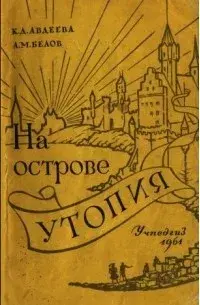
In 1955, Avraham published The Land of the Great Hapi, co-authored with N. S. Petrovsky and devoted to the history of ancient Egypt. A year later, together with the renowned historian of the Americas R. V. Kinzhalov, he released The Fall of Tenochtitlan, a gripping account of the collapse of the Aztec Empire. In 1959, On the Island of Utopia appeared, a book exploring the writings of Thomas More and his famous utopian vision, co-authored with K. D. Avdiyeva.
During the 1960s, Avraham worked closely with the Semitic-language scholar L. Kh. Vilsker. Together, they translated into Russian both treasures of medieval Syriac (Aramaic) literature–including Abul-Faraj's Book of Entertaining Stories and the folklore collection Tales That Refresh the Mind and Dispel Sorrow–and works by contemporary Israeli writers.
All these books, written in a lively and engaging style, won the affection of readers. Yet few knew that the author behind the pen name “A. Belov” was a Jewish intellectual who secretly taught Hebrew.
In 1959, to mark the centenary of Sholem Aleichem's birth, Avraham managed to publish a collection of six stories by the celebrated author in the Krokodil Library book series, a regular literary supplement to Krokodil magazine. He translated three of the stories from Yiddish and the other three–secretly–from the banned Hebrew language. The title page simply stated: “Translated from Jewish.” Fortunately, no one bothered to investigate further. These were the first legally published translations of Hebrew fiction in the Soviet Union since 1923–an achievement that was remarkable in itself.
In 1961, the trial of Adolf Eichmann, one of the principal architects of the “Final Solution to the Jewish Question,” began in Jerusalem. The proceedings lasted eight months, during which the world watched, transfixed, as survivors of the horrors of the Holocaust gave their testimony. Avraham could not remain indifferent to this historic event. He decided that Soviet readers, too, deserved to know the truth about the trial and about who Eichmann really was.
In 1963, Avraham completed his book The Eichmann Case for the Moscow publishing house Gosyurizdat (State Publishing House of Legal Literature). The book had already been typeset, the pages laid out, and even proof copies printed when, at the last moment, officials banned its publication. The official explanation cited “a shortage of paper and reductions in the publishing plan for the humanities.” The real reason, however, was undoubtedly political: the Soviet authorities had no desire to draw further attention to the Holocaust. They preferred to speak of “millions of Soviet people,” conveniently “forgetting” that Jews had been singled out by the Nazis for extermination. Only many years later would Avraham publish his reflections on the Eichmann trial in Hebrew in the Israeli journal Shvut.



Another of Avraham's works, The Bottom of the World, a popular science book on the history and geography of the ancient Near East scheduled for publication in 1967, was never published in the Soviet Union either. It finally appeared eleven years later, in Jerusalem.
Avraham was not only a writer and translator. He also served as a kind of bridge between Jewish culture, driven underground in the Soviet Union, and Israel. In the postwar years, when Hebrew was banned and Jewish books were being removed from libraries, he secretly smuggled works by Jewish writers into the USSR while also rescuing the manuscripts of deceased poets and sending them to Israel. This was extremely dangerous: distributing “anti-Soviet literature” could lead to imprisonment in labor camps. But Avraham could not do otherwise. He considered it his duty to preserve what the authorities were trying to erase forever.
One of the most remarkable episodes in Avraham's clandestine activities involved the archive of the Jewish poet Rachel Baumvol. He learned that the manuscripts of Rachel and her husband, Binyamin Blum-Makhlin, were in danger. They urgently needed to be sent to Israel–but how could this be accomplished? Avraham went to the Central Post Office, “expecting nothing good from a director named Tupitsyn.” He had already approached the academic secretary of the Institute of Oriental Studies, a Jewish man named Temkin, who had pompously declared, “I have no intention of helping Zionists!”
But then something extraordinary happened. Belov spotted the director at one of the post office windows and began explaining the meaning of an ancient Hebrew word: nefesh, meaning “soul.” The manuscripts he wanted to send, he explained, were the very expression of that soul. Tupitsyn listened and said, “Temkin has just called and asked me not to accept anything from you…” Then he gave the order: “Pack up these manuscripts and send them to Israel.”
As Avraham later recalled, “A little over a year later, thanks to a Russian postal worker with the rather unappealing surname Tupitsyn, not only Rachel's entire archive but also that of her husband, Binyamin Blum-Makhlin, had made its way to Israel.”
In 1974, after many years of waiting and struggling for the right to make aliyah, Avraham and his family immigrated to their ancestral homeland. They settled in Jerusalem, the city Avraham had dreamed of since childhood, when he first began studying sacred texts in Hebrew. At last, he could openly pursue the work he loved, without having to contend with censorship or fear denunciation.
His years in Israel proved extraordinarily productive: he published more than twenty (!) books in Hebrew and Russian. Among them was his memoir Eikh Hayiti Kushi (“How I Was a Negro”), published in 1990. The title, steeped in bitter irony, reflected the life of a man who had been made to feel like an outsider in his own country because of his Jewish origins and his love for Hebrew.
In 1998, the Lira publishing house released Avraham's most important work, a book he had spent many years preparing. For decades, he had painstakingly gathered information about Jewish writers, poets, and translators–those who had continued creating literature in a language banned in the Soviet Union. He searched archives for surviving manuscripts, met with those who had endured the horrors of political repression, and recorded their recollections.
The culmination of these years of painstaking research was Knights of Hebrew in the Former Soviet Union, an anthology of poetry and prose that also included invaluable biographical essays about persecuted authors. Avraham wrote about the poet Chaim Lensky, who had endured prisons and forced labor camps yet remained faithful to his native language; about Boris Gaponov, a gifted translator who was finally allowed to leave for Israel only when it had become clear that his days were numbered; about the brilliant Meir Kantorovich, who, isolated in a remote corner of Kazakhstan and deprived of access to original sources, managed to produce from memory an unparalleled commentary on Ecclesiastes and the Proverbs of King Solomon; and about Benzion Fradkin, a poet from Kharkiv who was executed in 1938…
The book became a unique testimony to how the Soviet authorities had “tormented, strangled, destroyed, and executed those who could neither live nor create without Hebrew.” Avraham rescued their names from oblivion.
As the book's publisher, Elena Kosonovskaya, aptly observed, “There is only one knight about whom not a word is said: the author himself.” Avraham was remembered by friends and colleagues not only as a man of truly encyclopedic knowledge, a writer with a refined sense of language, and a tireless researcher of Jewish culture, but also as a remarkably modest person.
The Israeli writer Shulamit Shalit recalled an episode–simple in itself, yet filled with poignant, deeply human warmth. She once met Avraham in Rishon LeZion at a ceremony inaugurating a street named after his namesake, the writer Even-Shoshan. They sat beside each other, and when the ceremony ended, Shulamit asked Avraham to wait while she found someone who could drive him to Jerusalem. But by the time she finally arranged a ride, Avraham had disappeared.
“Never wanting to be a burden to anyone, he always had a way of quietly and discreetly stepping aside. And now, once again, he had set off on foot in some unknown direction. Where could he possibly find a bus station here, on the outskirts of the city? I began to panic, but then I spotted his stooped figure and hurried after him. From a distance, he reminded me of my late father. Do we really need to share so many hardships with someone before we can come to love them?..”
Avraham Belov-Elinson passed away on March 24, 2000, in Jerusalem. He departed this world as a righteous man might–quietly, in his sleep, after watching Israel's Maccabi basketball club win a game…
There is a beautiful Jewish prayer, Avinu Malkeinu (“Our Father, Our King”), in which Jews ask the Almighty to “show us grace, though we have no worthy deeds to our credit.” Avraham Belov-Elinson, however, had truly performed a great many good deeds.
15.10.2026
Author: Mikhail Krivitsky
Translated by Lena Lores
Bibliography and Sources
1. Abul-Faraj. The Book of Entertaining Stories. Translated from Syriac, with an afterword and notes by A. Belov and L. Vilsker. Moscow; Leningrad, 1961.
2. Avdiyeva, K. D., and A. M. Belov. On the Island of Utopia. Leningrad, 1961.
3. Belov, A. M. The Bottom of the World. Jerusalem, 1978.
4. Belov (Elinson), A. M. Knights of Hebrew in the Former Soviet Union. Jerusalem, 1998.
5. Belov (Elinson), A. M. Eikh Hayiti Kushi (How I Was a Negro). In Hebrew. Jerusalem, 1990.
6. “Belov, Avraham Yehoshua.” WORLD ORT: Electronic Jewish Encyclopedia.
https://eleven.co.il/jewish-literature/in-hebrew/10485/
7. Bykhovsky, B. “Abraham Moiseyevich Elinson (Belov): One of the Knights of Hebrew Culture (On the 90th Anniversary of His Birth).” Ami Independent Jewish Newspaper.
https://ami-spb.ru/A258-9/A258-041.htm
8. The Pearl Seeker: Novellas by Israeli Writers. Translated from Arabic, Hebrew, and Yiddish. Compiled by L. Vilsker. Moscow, 1966.
9. Kinzhalov, R. V., and A. M. Belov. The Fall of Tenochtitlan. Leningrad, 1956.
10. Lipin, L. A. Clay Books. Moscow; Leningrad, 1952.
11. From Ahiqar to Jano. Translated from Syriac, compiled and annotated by A. M. Belov and Kh. L. Vilsker. Moscow; Leningrad, 1960.
12. Petrovsky, N. S. The Land of the Great Hapi. Leningrad, 1955.
13. Tales That Refresh the Mind and Dispel Sorrow. Translated from Syriac, compiled and annotated by A. Belov and L. Vilsker. Leningrad, 1972.
14. Shalit, Sh. “Ten Years Ago, a Knight of Hebrew Passed Away in Jerusalem: Avraham Moiseyevich Belov-Elinson (1911–2000).” Seven Arts, No. 11 (12), November 2010.
https://www.7iskusstv.com/2010/Nomer11/Shalit1.php
15. Sholem Aleichem. Abroad and at Home. Translated from Jewish by A. Belov and P. Kobzarevsky. Moscow, 1959.
16. “Elinson, Avraham-Yehoshua Moiseyevich.” Pamyat Naroda (Memory of the People). Online database.
17. Gilboa, Jehoshua A. The Suppression of Hebrew Literature and Culture in the Soviet Union. New Jersey, 1982.
18. Jews in the Soviet Union: A History. 6 vols. Edited by G. Estraikh and D. Engel. New York, 2022–2025.